
MACROECONOMIC FRAMEWORK
In 2024, the Angolan economy grew by 4.4%, recording the highest level of real GDP growth since 2015. Inflation stood at 27.5%, and the foreign exchange rate depreciated by 9.1% compared to 2023.


MACROECONOMIC FRAMEWORK
WORLD ECONOMY
Growth in the global economy was robust and stable throughout 2024, driven by a less restrictive monetary policy in the US and Europe, in line with the slowdown in inflation, the expansion of world trade, and a more accommodating fiscal policy in Japan and the UK. Moderating the growth dynamics were the conflicts in the Middle East and Eastern Europe, which constrained greater investment in the countries of these regions.
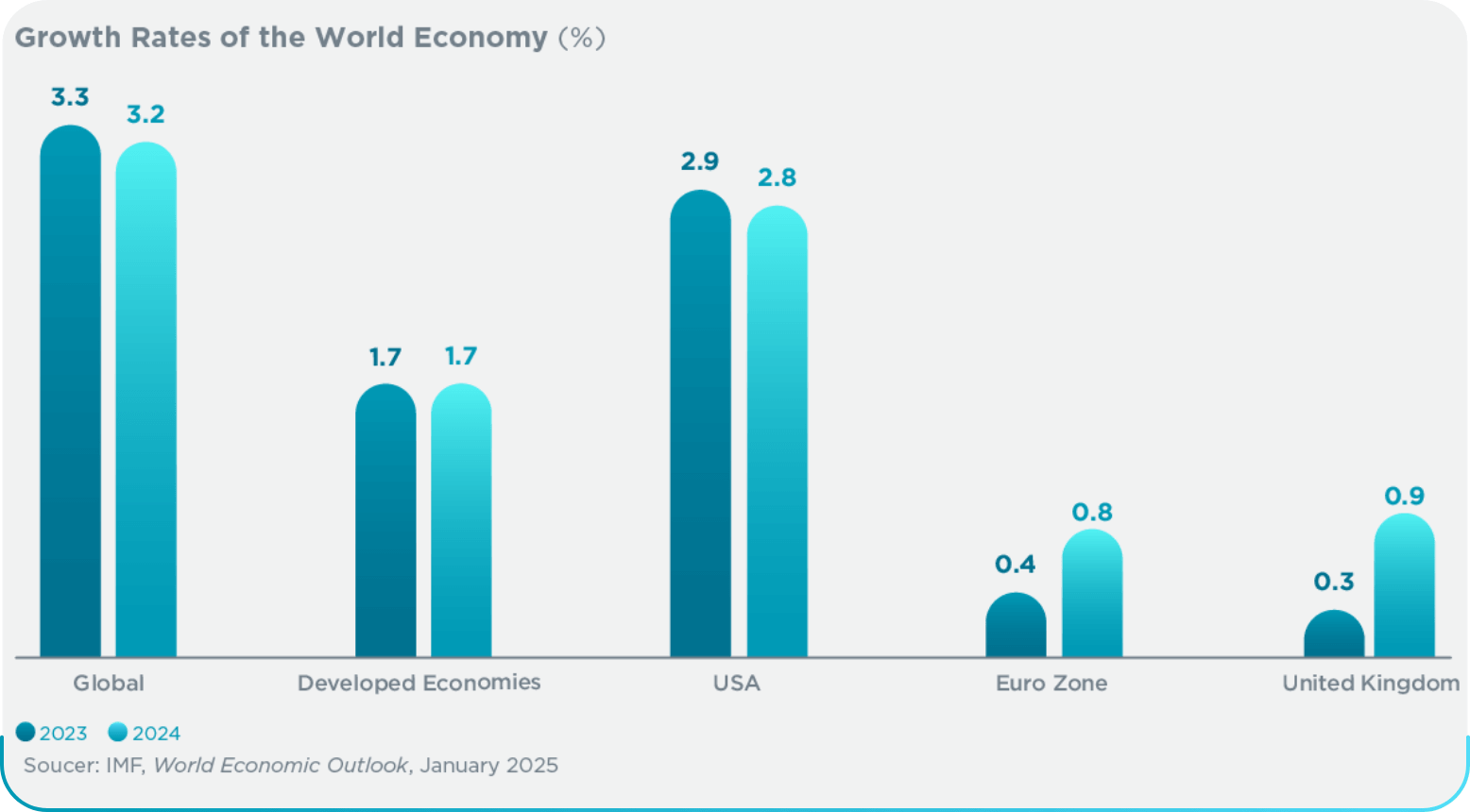
The International Monetary Fund (IMF) has estimated growth of 3.2% for the world’s real Gross Domestic Product (GDP) in 2024, slightly below the 3.3% recorded in 2023, according to the January 2025 update of the World Economic Outlook. Forecasts for economic growth showed a divergent trend at the regional level in 2024. In the Advanced Economies, the IMF forecast real GDP growth of 1.7%, with the US leading the way with 2.8%, followed by the Other Advanced Economies (2.0%), while the Euro Zone could show a more moderate expansion of 0.8%. The same institution forecast growth of 4.2% for Emerging and Developing Economies, led by India (6.5%) and China (4.8%).
The World Bank has estimated growth of 2.7% for global trade, a significant increase on the 0.8% recorded in 2023.
ANGOLAN ECONOMY
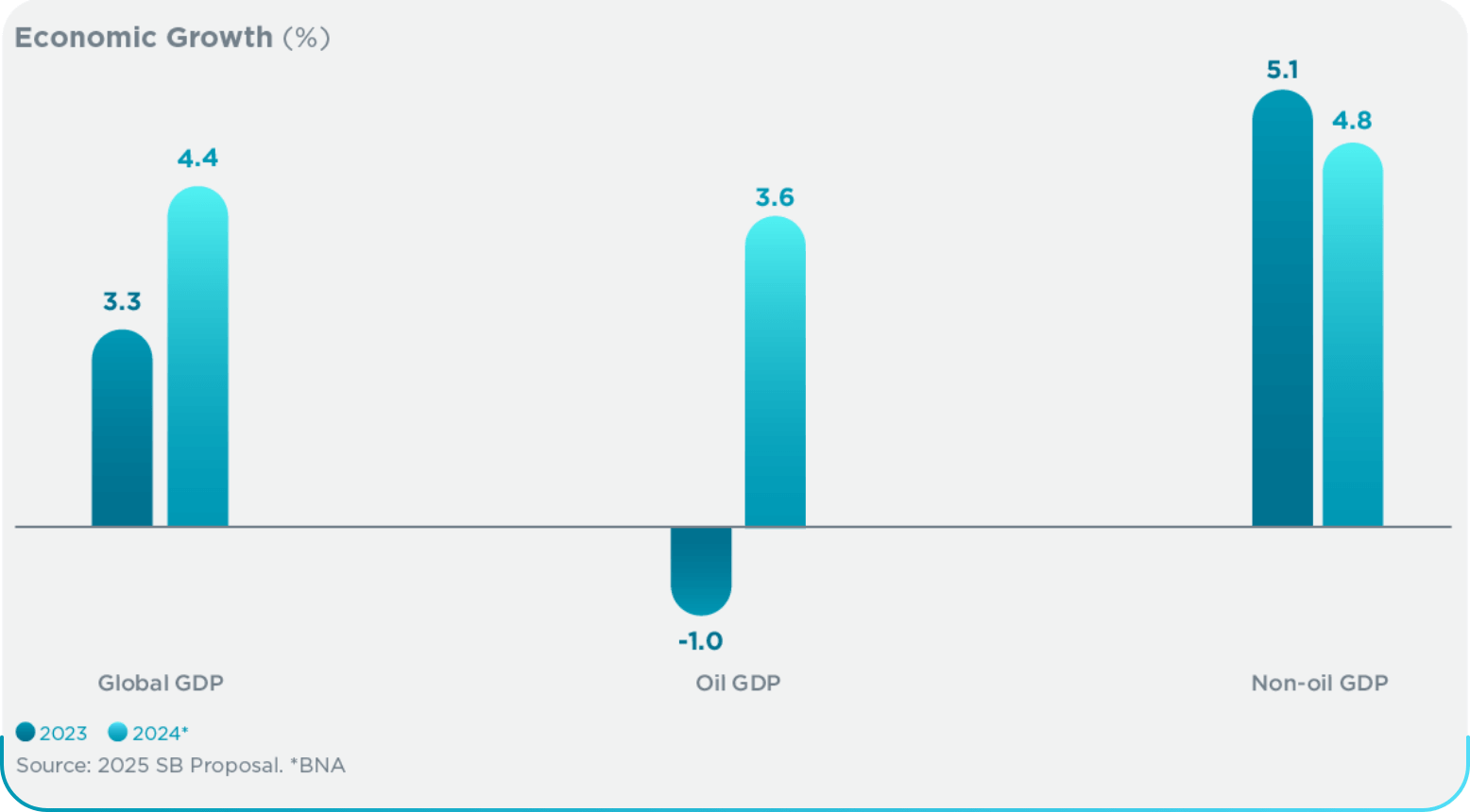
In 2024, the Angolan economy maintained the growth trajectory observed over the past two years, recording the highest level of real GDP growth since 2015. According to the Instituto Nacional de Estatística (INE), GDP grew by 4.4% year-on-year, driven mainly by the Mining of diamonds, metallic minerals and other non-metallic minerals (+44.8%), Fishing (+12.2%), Transport and Storage (+10.4%), Agriculture and Forestry (+3.5%), and the Oil sector (+2.8%). The Banco Nacional de Angola (BNA) has estimated economic growth of 4.4% for 2024, driven by the oil sector (+3.6%) and the non-oil sector (+4.8%).
FINANCIAL MARKETS
The money supply, measured by the M2 monetary aggregate, stood at AOA 16,665.0 billion in 2024, an increase of 6.5% year-on-year. In national currency, M2 increased by 9.9% to AOA 10,039.2 billion, driven by growth in Notes and Coins Held by the Public (3.0%), Demand Deposits (8.9%) and Term Deposits (12.9%).
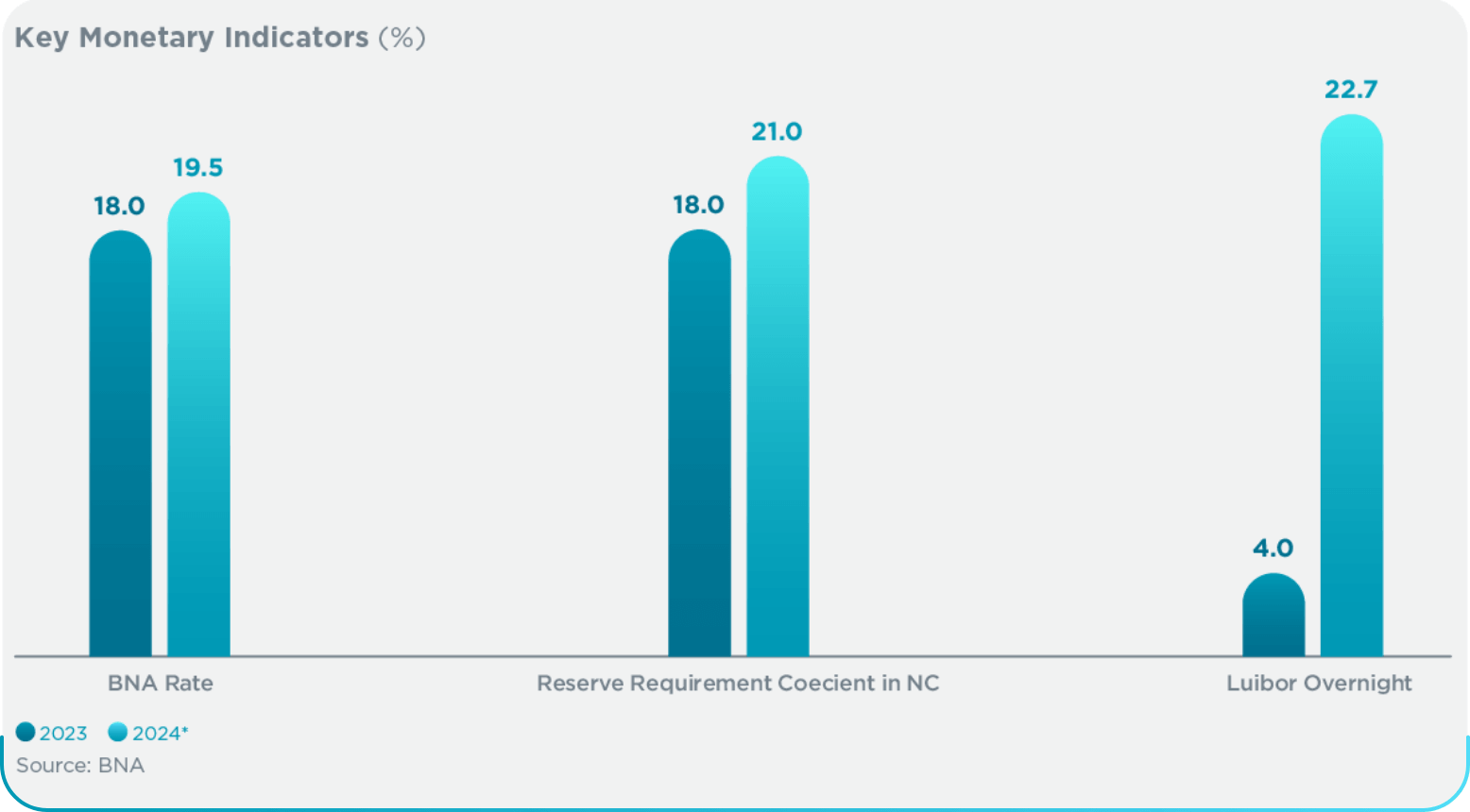
The BNA’s benchmark interest rates recorded an upward trend – particularly the BNA Rate, which stood at 19.5%, an annual increase of 1.5 p.p. – a more restrictive monetary policy stance, in line with keeping the inflation rate at a high level. Following the same trend, the Standing Deposit Facility Rate increased by 2 p.p. to 20.5%, and the Reserve Requirement Ratio in national currency increased by 3 p.p. to 21.0%. Interest rates on the Interbank Money Market rose by an average of 11.3 p.p., most notably Luibor Overnight, which increased by 19 p.p. to close the year at 22.7%, the highest level since 2016.